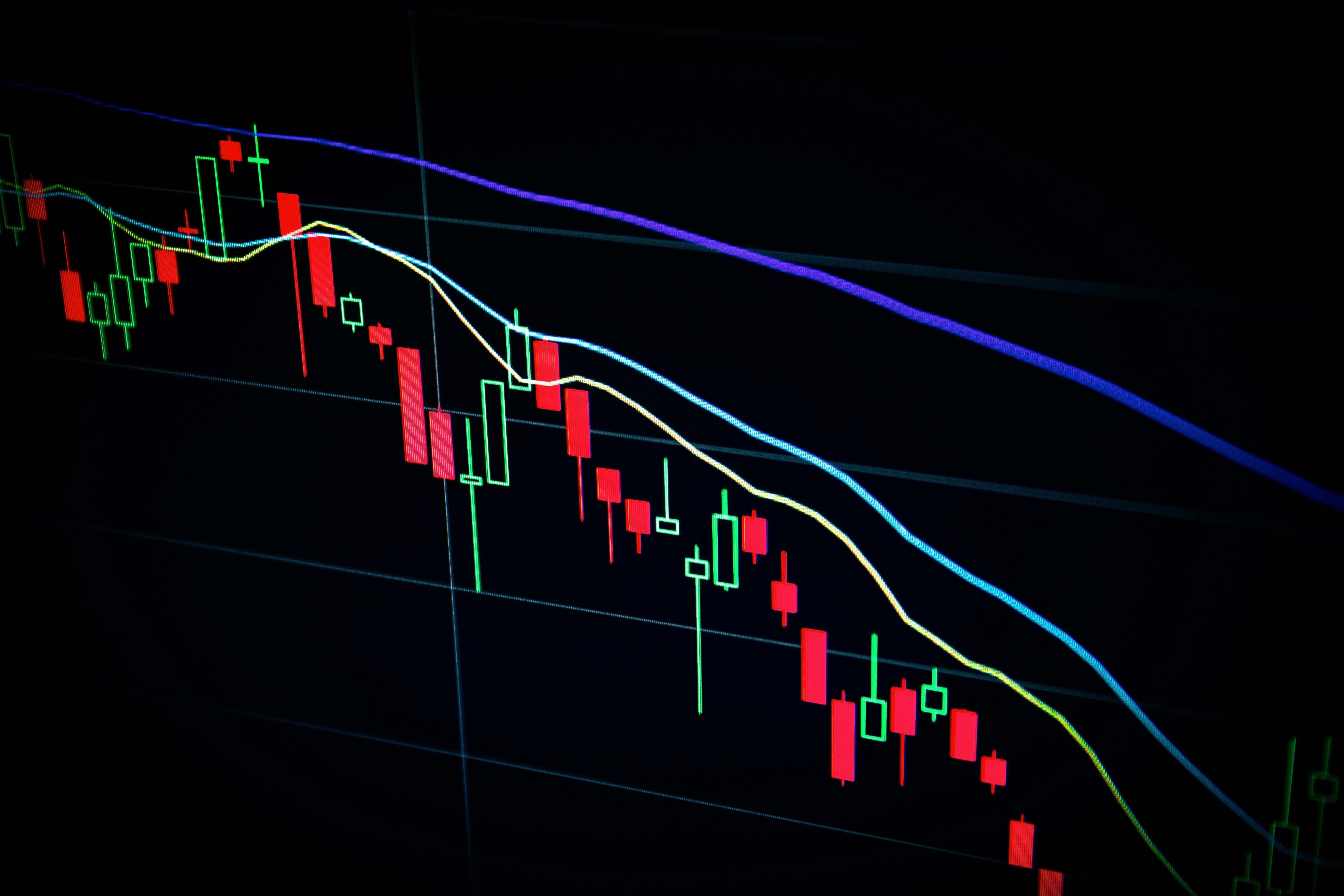

1
Fragmented Intelligence
Market, operational, logistics, contract, and risk data remain spread across disconnected systems.
Critical trading intelligence remains fragmented across ETRM platforms, ERP systems, spreadsheets, and workflows, making it harder to act with speed, confidence, and visibility.
Market, operational, logistics, contract, and risk data remain spread across disconnected systems.
Teams lose valuable time gathering, validating, and reconciling data before they can act.
Exposure, position, margin, and operational constraints are often viewed through separate reports and workflows.
Spreadsheet-heavy workflows slow down approvals, increase inconsistency, and make decision trails harder to audit.
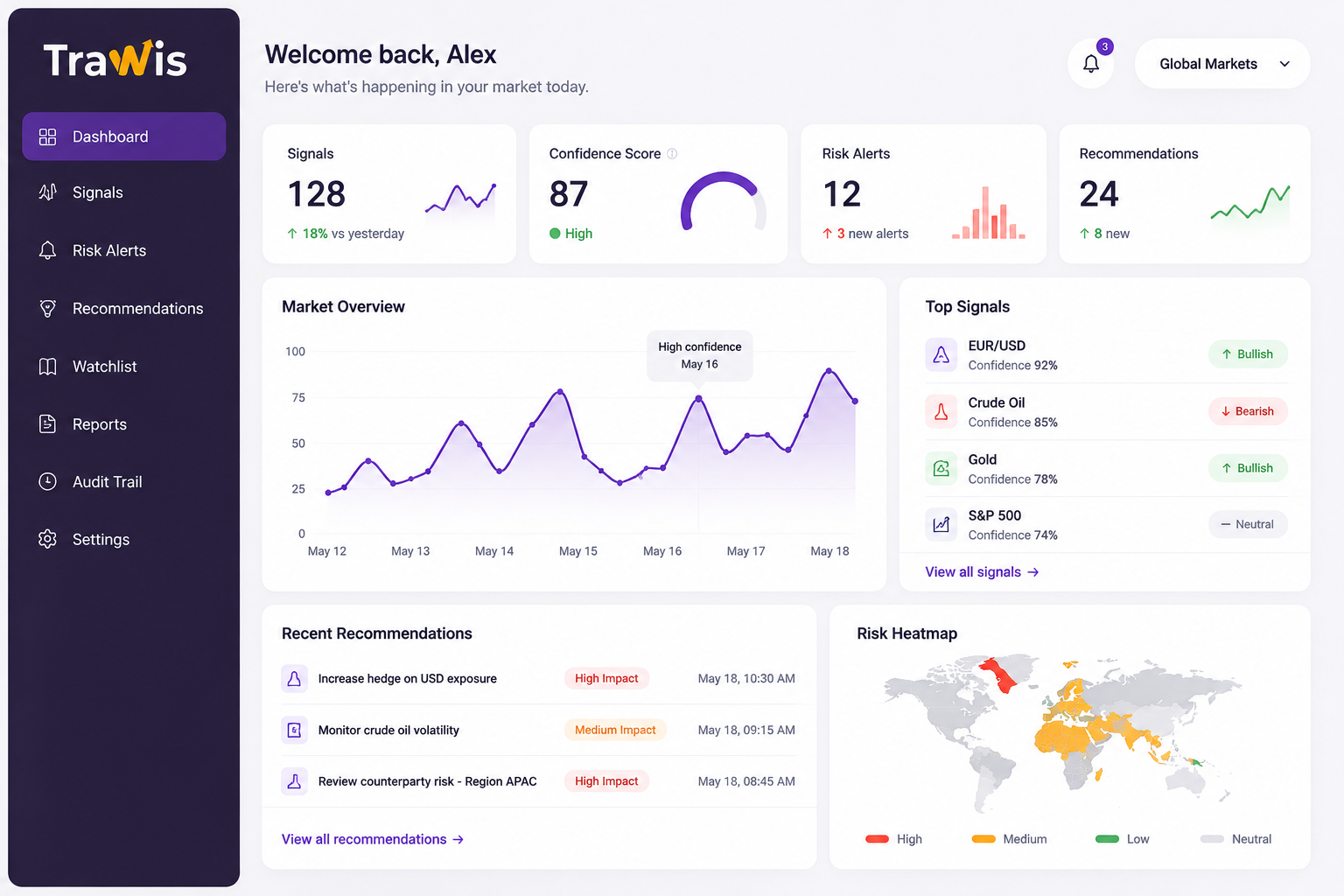
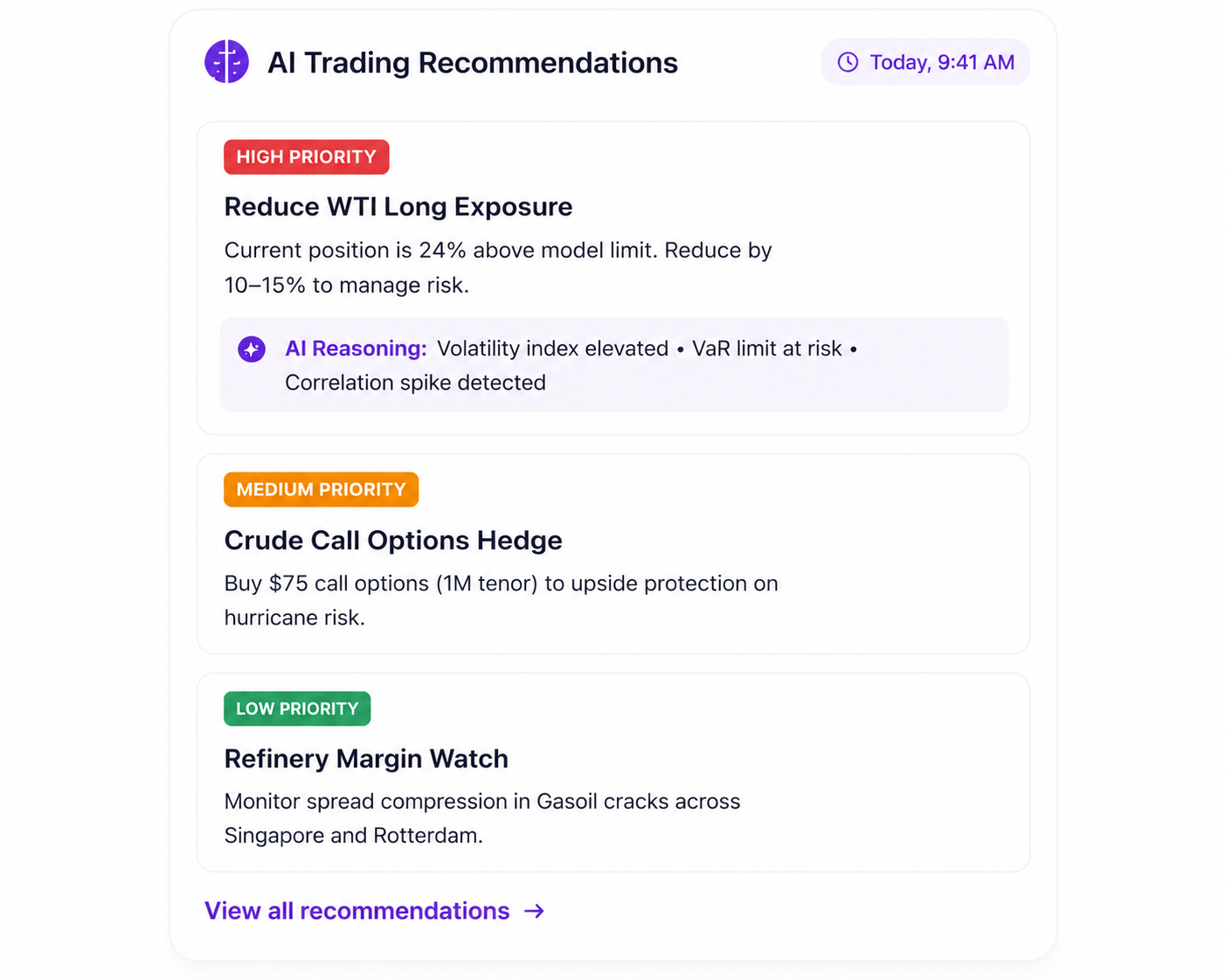
Predictive signals, recommended actions, confidence scores, risk alerts, and audit-ready decision trails, all unified in a single AI-powered intelligence workbench.
Price Insights, spreads, and market movements.
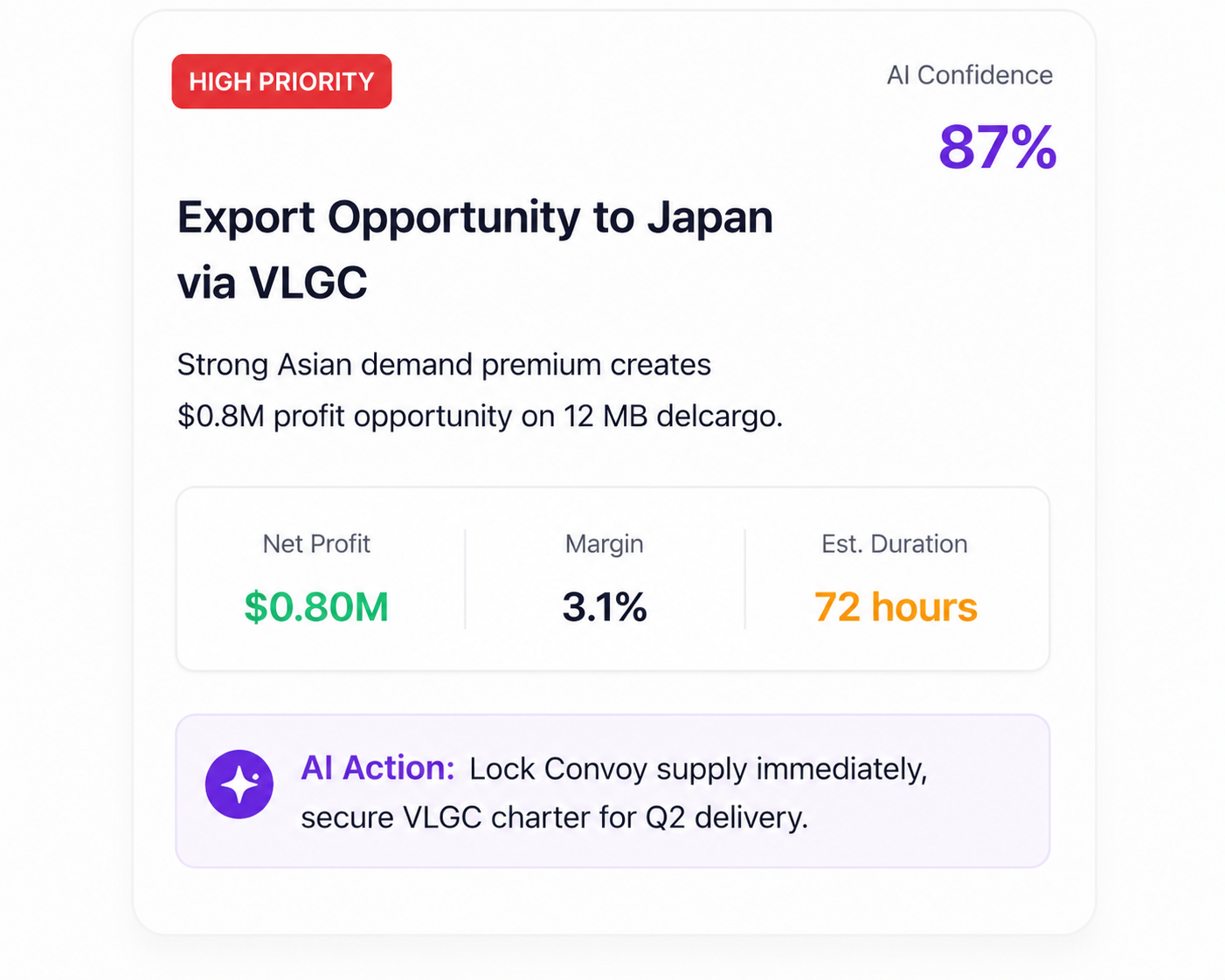
Generate buy, sell, hedge, and risk actions.
Initiate governed workflows back into ERP and CTRM systems.
Predictive signals, recommended actions, confidence scores, risk alerts, and audit-ready decision trails unified in a single AI-powered intelligence workbench.
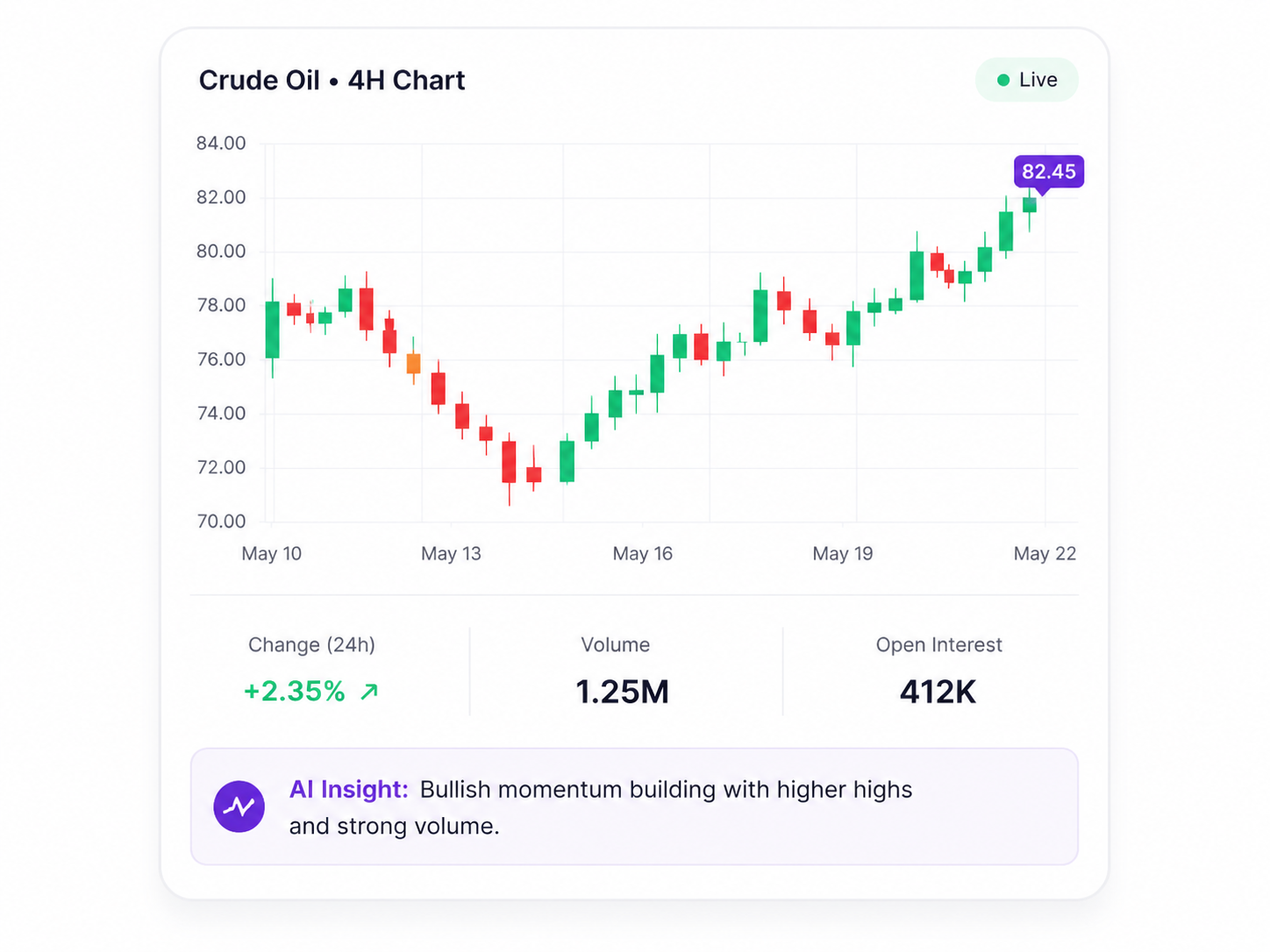
Forecasts commodity prices using market, weather, geopolitical, and operational signals.
Unifies internal and external data into a single trusted source for decision-making.
Generates explainable recommendations and governed workflows tailored to trading operations.
TraWis sits above your ETRM/CTRM, ERP, and other operational systems, unifying data without requiring rip-and-replace transformation.
Commodity forecasting informed by market, weather, geopolitical, and operational signals.
Coverage across the internal and external parameters that shape trade outcomes.
Synchronous API-based connectivity with enterprise and operational applications.
Structured, annotated data designed for high-volume machine learning and decision models.
Start with a focused use case and scale without disrupting existing operations.
Market volatility, geopolitical uncertainty, weather disruptions, and operational constraints are reshaping commodity markets faster than legacy systems can respond.
Global commodity-trading EBIT remained substantial in 2025, reinforcing the scale of the value available to organizations with advanced trading capabilities.
Broader implementation of value-chain optimization could improve trading, refining, and downstream performance by more than $30 billion annually.
Weather, geopolitical shifts, logistics disruptions, and volatility can change trading outcomes in minutes, not days.
1 Source: McKinsey & Company, “At the Threshold of a New Era in Commodity Trading,” March 2026 . McKinsey reports total commodity-trading EBIT of $69 billion in 2025.
2 Source: McKinsey & Company, “How to Capture the Next S-Curve in Commodity Trading,” February 2025 . McKinsey estimates that widespread value-chain optimization could improve trading, refining, and downstream P&L by more than $30 billion annually.
Faster decisions
Margin improvement
Reduction in exposure risk
Less manual effort
TraWis was created by leaders who have spent decades solving complex challenges across energy trading, enterprise technology, and applied artificial intelligence. We built TraWis because the future of energy trading requires an intelligent decision layer that connects market intelligence, operational realities, and enterprise execution.
Discover how energy trading teams can unify intelligence, reduce risk, and act faster with TraWis.